Creating Value Beyond Batteries
While batteries are the enabling technology, the ultimate goal of this initiative is to create lasting economic, educational, and community value. Battery reuse serves as the foundation for workforce development, student training, community energy resilience, and the creation of locally rooted enterprises that can strengthen Puerto Rico's economy. By maximizing the useful life of batteries, we create opportunities that extend far beyond energy storage itself.
Toyota's hybrid vehicle platform, one of the most successful automotive technologies in the world, underpins a growing fleet of hybrid vehicles in Puerto Rico. This creates an opportunity to maximize the value of hybrid vehicle traction batteries through reuse, repurposing, and responsible recycling. TECRE seeks to build Puerto Rico's first community-centered circular battery economy, focused initially on nickel-metal hydride (NiMH) batteries commonly used in Toyota hybrid vehicles. The Caño Martín Peña communities will serve as the operational and economic center of the initiative. The program combines economic development, workforce training, energy resilience, and environmental stewardship into a single sustainable model.
The Circular Battery Economy Model
The Caño Martín Peña communities will serve as the operational and economic center of the initiative. The program combines economic development, workforce training, energy resilience, and environmental stewardship into a single sustainable model.

Figure 1 illustrates two complementary pathways. The Green Zone extends battery life through the automotive reuse of reconditioned battery modules. The Yellow Zone repurposes modules that no longer meet automotive requirements into community energy storage systems that provide backup power for vulnerable households. Modules that ultimately reach end-of-life are returned for responsible recycling, creating critical components of a closed-loop circular economy. Responsible recycling includes dismantling, materials recovery, and returning recovered metals to the battery supply chain. This downstream Blue Zone completes the circular economy but is outside the scope of the present initiative.
Figure 1. Maximizing battery value through automotive reuse, community energy resilience, and responsible recycling.The initiative is designed to create skilled technical jobs, support workforce development, strengthen community resilience, provide educational opportunities for students, and establish a profitable enterprise within the G8 communities. Our vision is to demonstrate how community-centered businesses can create both economic and social value while advancing Puerto Rico's transition toward a more resilient energy future.Hybrid vehicles represent a substantial and growing segment of Puerto Rico's electrified transportation fleet. As these vehicles age, an increasing number of battery packs will eventually require replacement. Rather than viewing retired batteries solely as a waste stream, this initiative treats them as a valuable resource capable of generating additional economic, educational, and community benefits.
The Circular Battery Economy Model
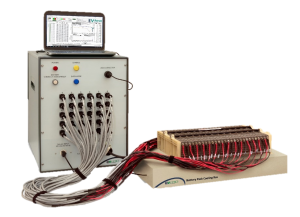
The Green Zone: Extending Battery Life Through Automotive ReuseThe Green Zone pathway maximizes the value of NiMH traction battery modules by extending their useful lifetime through reconditioning and reassembly into aftermarket battery packs. Services provided by the G8 Battery & Resilience Center will include battery diagnostics, battery replacement, and installation services. Modules recovered from retired hybrid vehicles are reconditioned using proven electrochemical methods and then categorized by amp-hour capacity and internal resistance. Modules meeting performance requirements are balanced and assembled into aftermarket traction batteries.This aftermarket battery solution supports hybrid vehicle owners, reduces waste, extends vehicle life, and generates sustainable economic activity within the G8 communities.
The Circular Battery Economy Model
The Yellow Zone: Community Energy ResilienceThe Yellow Zone pathway captures additional value from battery modules through community energy storage applications. Modules that no longer meet automotive requirements but retain useful capacity are repurposed into community energy storage systems designed to provide backup power for vulnerable households within the G8.These systems can support lighting, communications, internet access, refrigeration of medicines, and other essential functions during power outages. In this way, batteries that can no longer serve transportation needs continue providing meaningful value to the community.
The G8 Battery & Resilience Center will serve as a workforce development center, educational resource, community energy hub, and circular economy demonstration site. The initial facility is expected to create approximately five skilled technical jobs, with opportunities for future expansion. Positions will include battery installation, battery refurbishment, business operations, marketing, and administrative support.Beyond direct employment, the center will provide training opportunities for students, interns, and community members seeking careers in renewable energy, energy storage, and advanced technology industries.