
Puerto Rico's Energy Future
Puerto Rico faces a fundamental energy challenge: the island has abundant renewable-energy resources, yet its electricity system remains heavily dependent on imported fossil fuels, vulnerable to extreme weather, and burdened by high electricity costs. At the same time, Puerto Rico possesses many of the natural advantages needed to build a cleaner, more resilient energy system—especially its location in the Caribbean, abundant sunlight, and substantial potential for distributed solar generation and energy storage.
A Fragile and Expensive Energy System
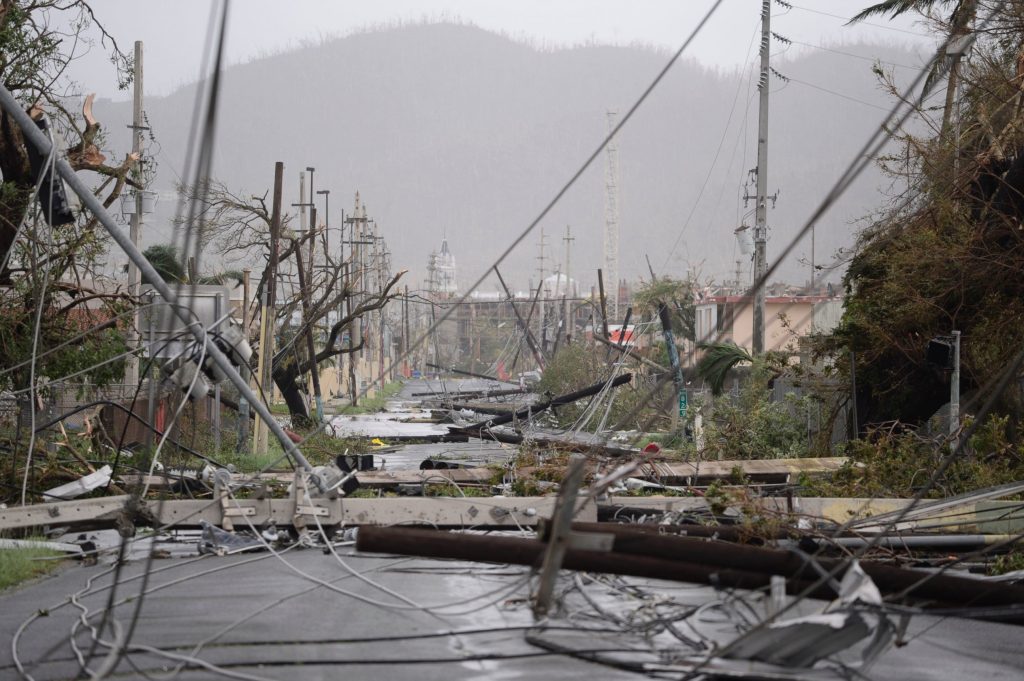
Electricity reliability has been a persistent challenge for Puerto Rico. The island’s power system is particularly vulnerable to hurricanes and other extreme weather because of its geographic isolation, mountainous terrain, extensive transmission and distribution network, and dependence on large centralized generating facilities.
The devastation caused by Hurricanes Irma and Maria in September 2017 demonstrated the consequences of that vulnerability. Hurricane Maria devastated approximately 80% of Puerto Rico’s electric grid and resulted in the longest blackout in U.S. history, with electricity restoration taking as long as 328 days in some areas.
The problem did not end with Maria. Puerto Rico has continued to experience major power interruptions, including widespread outages following subsequent storms and other failures. The island’s electric system has suffered from years of underinvestment and infrastructure deterioration, while its geography requires electricity to travel through approximately 18,000 miles of transmission and distribution lines.
Electricity is also expensive. Puerto Rico’s average electricity price across all customer classes was approximately 24.1 cents per kilowatt-hour in 2024, placing Puerto Rico among the jurisdictions with the highest electricity prices in the United States.
The island’s dependence on imported fossil fuels is a major contributor to this vulnerability. Puerto Rico has no significant domestic fossil-fuel production and relies heavily on imported petroleum and other fuels for electricity generation. This dependence exposes Puerto Rico to fluctuations in international fuel prices as well as the additional costs associated with transporting fuel to an island.
Puerto Rico’s Energy Challenge Is Also an Extraordinary Renewable-Energy Opportunity
Puerto Rico’s energy challenges are substantial, but the island possesses an exceptional natural resource that is available everyday: sunlight.
Located between approximately 18° and 18.5° north latitude, Puerto Rico lies in the tropical Caribbean, relatively close to the equator. Its geographic location provides a strong solar resource throughout the year, making photovoltaic generation particularly well suited to the island.
The magnitude of that resource can be illustrated with a simple calculation.
The Solar Resource: A Simple Calculation
Photovoltaics: Design and Installation Manual by Solar Energy International reports approximately 4.4 peak sun hours per day for Puerto Rico.
A peak sun hour represents the equivalent of one hour of sunlight at an irradiance of 1,000 watts per square meter. Using 4.4 peak sun hours per day provides a straightforward way to estimate the potential output of photovoltaic panels.
For an illustrative calculation, assume:
- Puerto Rico land area: 9 billion m²
- Area covered by PV panels: 1%
- PV panel area: 90 million m²
- Solar resource: 4.4 peak sun hours/day
- PV module efficiency: 20%
- System losses: 15%
1. Area covered by photovoltaic panels
9,000,000,000 m² × 1% = 90,000,000 m²
Thus, covering an area equal to 1% of Puerto Rico with photovoltaic panels would correspond to 90 million square meters of panel area.
2. Solar energy incident on each square meter per day
4.4 peak sun hours × 1 kW/m² = 4.4 kWh/m²/day
3. Electricity produced at 20% PV efficiency
4.4 kWh/m²/day × 0.20 = 0.88 kWh/m²/day
4. Account for 15% system losses
0.88 × 0.85 = 0.74913 kWh/m²/day
Thus, after the assumed system losses, each square meter of photovoltaic panel area would produce approximately 1.08 kWh per day.
5. Daily electricity production from 1% of Puerto Rico
90,000,000 m² × 0.74913 kWh/m²/day = 67,422,000 kWh/day
or approximately: 67.4 million kWh per day
6. Annual electricity production
97,614,000 kWh/day × 365 days = 24.6 kWh/year
That is an extraordinary amount of electricity.
For comparison, EIA reports that in 2024 Puerto Rico sold approximately 7.853 billion kWh to residential customers and 1.559 billion kWh to industrial customers. Together, those two sectors accounted for approximately:
7.853 billion + 1.559 billion = 9.412 billion kWh/year
The theoretical electricity production from PV panels occupying an area equal to 1% of Puerto Rico would therefore be:
24.6 billion kWh ÷ 9.41 billion kWh = 2.6
An area equal to only 1% of Puerto Rico covered with photovoltaic panels could theoretically generate approximately 2.6 times the electricity sold annually to residential and industrial customers combined.
This calculation is intended to illustrate the scale of Puerto Rico’s solar resource, not to suggest that 1% of the island should actually be covered with photovoltaic panels. Actual solar development would require careful consideration of land availability, terrain, environmental constraints, agricultural land, existing development, panel orientation and spacing, transmission capacity, energy storage, and other system requirements. The calculation also does not address the timing mismatch between solar production and electricity demand.
Nevertheless, the magnitude is important. It demonstrates that Puerto Rico’s challenge is not a lack of sunlight. The island possesses a solar resource capable of producing electricity on a scale far beyond its current residential and industrial electricity consumption.
Solar Energy and Energy Storage
Solar generation alone cannot solve Puerto Rico’s energy challenge. Solar panels produce electricity during daylight hours, while electricity demand continues after sunset. Clouds and storms can also temporarily reduce solar production.
Energy storage therefore becomes an essential complement to solar generation.
During periods of strong solar production, electricity can be used immediately or stored in batteries. Stored energy can then be released when solar production declines, during evening hours, or when portions of the electric grid are unavailable.
The combination of solar generation and energy storage can therefore provide both renewable electricity and greater resilience.
This is particularly important for Puerto Rico. A distributed system of solar generation and storage can allow homes, businesses, critical facilities, and communities to maintain essential electrical services even when the larger grid is disrupted.
PR100: A Roadmap Toward 100% Renewable Energy

Puerto Rico does not have to approach this transition without a roadmap. The U.S. Department of Energy and the National Renewable Energy Laboratory led the Puerto Rico Grid Resilience and Transitions to 100% Renewable Energy Study (PR100), a comprehensive analysis of pathways for Puerto Rico to achieve its goal of 100% renewable electricity by 2050. The study incorporated extensive stakeholder input and examined the technical requirements for a more resilient renewable-energy system.
PR100 reached an important conclusion: Puerto Rico has sufficient renewable-energy resources to meet its electricity demand now and through 2050. At the same time, the study emphasizes that significant upgrades to the electric system will be necessary, including improvements to generation, transmission, distribution, and system operations.
PR100 also makes clear that renewable energy and resilience must be considered together. Puerto Rico needs an electricity system capable not only of generating sufficient energy, but also of continuing to provide reliable electricity when hurricanes and other extreme events disrupt the grid. The study therefore points toward a combination of utility-scale renewable generation, distributed solar, energy storage, and improvements to the transmission and distribution system.
Puerto Rico’s Geographic Advantage
Puerto Rico’s location presents challenges, but it also provides significant advantages.
Its tropical location provides abundant sunlight throughout the year. Solar resources are available across the island, making photovoltaic generation suitable for rooftops, commercial properties, public facilities, parking areas, and appropriately selected ground-mounted sites.
Puerto Rico also has additional renewable resources, including wind, hydropower, and biomass, that can complement solar generation in appropriate locations.
Most importantly, Puerto Rico’s geography makes distributed energy particularly valuable.
A centralized system depends heavily on large generating facilities and long transmission corridors. A more distributed system can place electricity generation and storage closer to where electricity is consumed.
Instead of depending entirely on a small number of large facilities and transmission pathways, distributed generation can create multiple sources of electricity throughout the island.
That distinction becomes especially important following a hurricane, when portions of the transmission and distribution system may be damaged or inaccessible.
A Renewable-Energy Future Is Within Reach
Puerto Rico therefore faces a striking contradiction.
The island has:
- High electricity costs
- Heavy dependence on imported fossil fuels
- An aging and vulnerable electric grid
- Frequent and sometimes prolonged power outages
- Exposure to hurricanes and other extreme weather
Yet Puerto Rico also has:
- Abundant year-round sunlight
- Approximately 6.38 peak sun hours per day
- Significant potential for photovoltaic generation
- Opportunities to combine solar generation with energy storage
- Additional renewable resources including wind, hydropower, and biomass
- A legally established goal of achieving 100% renewable electricity by 2050
The challenge is therefore not a lack of renewable-energy resources. Puerto Rico has the energy resources; the challenge is figuring out how to harness them effectively. This is the central point made in Eugene S. Smotkin’s July 2026 opinion article in El Nuevo Día, which examines Puerto Rico’s energy potential and the need to develop the systems necessary to make use of it.
The PR100 study demonstrates that a 100% renewable-energy future is technically feasible, while the solar-resource calculation above illustrates the extraordinary scale of just one of Puerto Rico’s renewable resources.
Puerto Rico has the sunlight. It has the renewable resources. It has the technology.
The challenge is building an energy system capable of making the most of them. The sun is already there. Puerto Rico’s energy future depends on how effectively that resource can be captured, stored, and delivered.